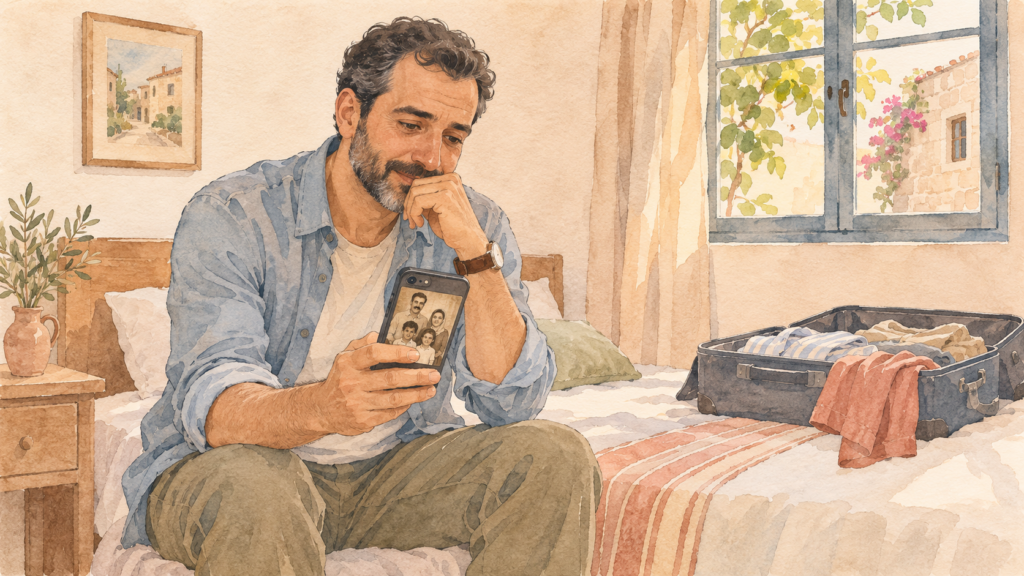
A child who learns to look after everyone often becomes an adult who never learned to be looked after.
Parentification happens when a child takes on adult or caregiving responsibilities – looking after their parents or siblings emotionally or practically – before they are ready.
1 Understand the core chain
- The family environment asks the child to take on adult responsibilities
- The child learns to handle other people’s needs before their own
- Caregiving becomes a main source of worth and safety
- The pattern extends into adult relationships, automatically putting others’ needs first
- Your own needs stay underdeveloped or hard to identify
“A child who learns to look after everyone often becomes an adult who never learned to be looked after.”
2 Recognise how it shows up
- Body: Discomfort or restlessness when someone takes care of you or supports you.
- Thoughts: “I have to handle this myself”, “I don’t really know what I need.”
- Behaviours: Automatically managing other people’s emotions or logistics, finding it hard to accept help.
One isolated sign is not enough to define a pattern.
3 The cycle how it keeps going
- Child takes on adult duties
- Others come first
- Caring becomes your worth
- Pattern extends into adult life
- Own needs stay underdeveloped
…and back to the start.
4 Explore questions to go further
- What responsibilities did I carry as a child that weren’t mine to carry?
- How would I feel if someone took care of me, even briefly?
- What do I need right now, separately from everyone else’s needs?
5 Go deeper needs and beliefs
Need: To be taken care of without having to earn it by caring for others.
Belief: “I only have value when I’m handling everyone’s needs.”
6 Next steps where to go from here
- Say one personal need out loud this week.
- Accept an offer of help without turning it back into a caregiving role.
- Notice the discomfort of receiving support without immediately giving something back.
Educational use – does not replace professional support. © Nomad Mental Health