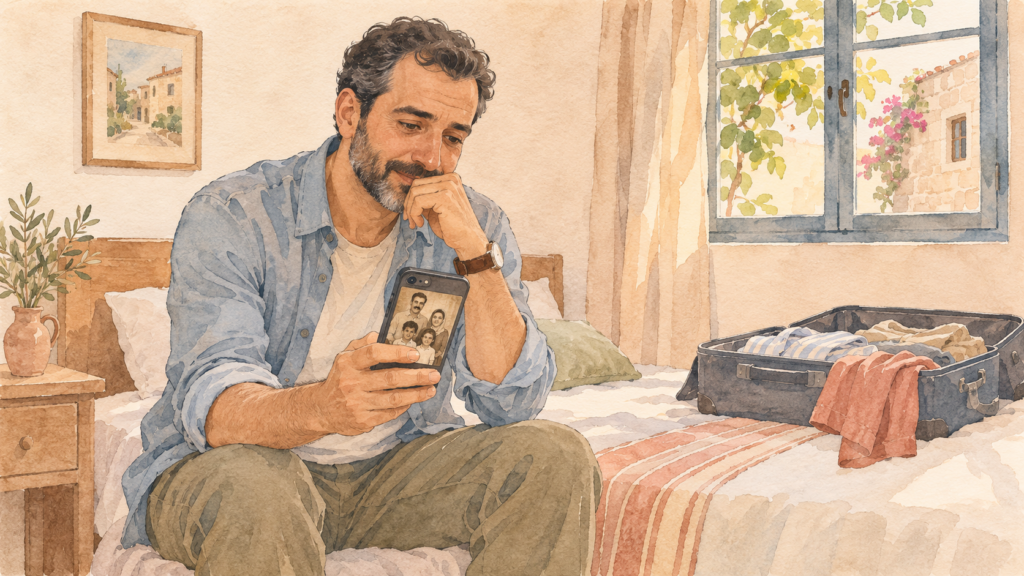
What a family refuses to name doesn’t disappear – it just becomes something you learn not to ask about.
Family secrets and unspoken topics are subjects or events that are never openly discussed, creating the feeling that some things must never be named – even when their effects are still felt.
1 Understand the core chain
- A significant event or topic is never openly mentioned in the family
- An unspoken rule forms: “We don’t talk about that”
- Related topics become vaguely uncomfortable or off-limits, with no explanation
- Questions and curiosity are subtly discouraged
- The silence is kept and passed on to the next generation
“What a family refuses to name doesn’t usually disappear – it just becomes something everyone quietly learns to stop asking about.”
2 Recognise how it shows up
- Body: Vague tension or discomfort when a particular topic comes up, without knowing exactly why.
- Thoughts: “We just don’t talk about that”, “I feel like something happened, but I’ve never asked.”
- Behaviours: Changing the subject when certain themes come up, noticing gaps in the family story without acknowledging them.
One isolated sign is not enough to define a pattern.
3 The cycle how it keeps going
- Event never mentioned
- Unspoken rule forms
- Related topics off-limits
- Questions discouraged
- Silence passed on
…and back to the start.
4 Explore questions to go further
- What topic in my family has always felt slightly off-limits, for no clear reason?
- What do I imagine might be true, even without confirmation?
- What would asking a direct question about it cost me – or free me from?
5 Go deeper needs and beliefs
Need: Clarity, and permission to know your own family history.
Belief: “Some things are safer left unsaid, even if it means not fully understanding my own story.”
6 Next steps where to go from here
- Write down the specific topic that has always felt unspoken.
- Think of one careful, low-risk question you could ask about it.
- Notice the discomfort of naming the rule of silence itself, even just privately.
Educational use – does not replace professional support. © Nomad Mental Health