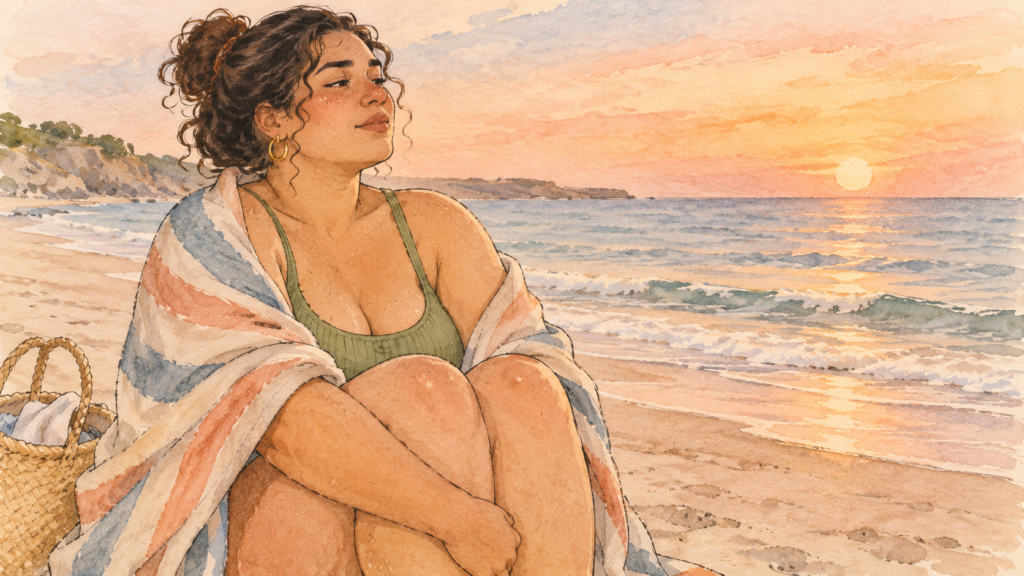
Avoiding the mirror doesn’t solve body distress – it often leaves the distorted inner image unchallenged.
Avoiding your own reflection is a pattern of actively avoiding mirrors, photos or other people’s visual attention, usually to prevent body-related distress.
1 Understand the core chain
- A situation comes up where you might see your reflection or be noticed visually
- Anticipated distress about the reflection or the attention switches on
- Mirrors, photos or looks are actively avoided
- Your relationship with your own appearance stays distorted or blurry
- The avoidance reinforces the belief that facing your reflection would be unbearable
“Avoiding the mirror doesn’t solve body distress – it often leaves the distorted inner image unquestioned.”
2 Recognise how it shows up
- Body: Tension or unease at the idea of catching your reflection or being photographed.
- Thoughts: “I don’t want to see myself right now”, “I hate being in photos.”
- Behaviours: Avoiding mirrors beyond necessary glances, refusing to be photographed.
One isolated sign is not enough to define a pattern.
3 The cycle how it keeps going
- Reflection or attention
- Anticipated distress
- Mirrors avoided
- Self-image stays distorted
- Belief reinforced
…and back to the start.
4 Explore questions to go further
- What exactly am I afraid of seeing or feeling if I look at myself directly?
- What would it be like to look briefly and neutrally, without judging straight away?
- Has avoiding the mirror really reduced my body distress, or only avoided facing it?
5 Go deeper needs and beliefs
Need: A more neutral, less distorted relationship with your own reflection.
Belief: “Seeing myself in a reflection, or being looked at, will be unbearable.”
6 Next steps where to go from here
- Practise brief, neutral mirror checks, without judging or correcting straight away.
- Let a photo be taken without avoiding it or deleting it immediately.
- Consider professional support if avoiding mirrors seriously affects daily life.
Educational use – does not replace professional support. © Nomad Mental Health