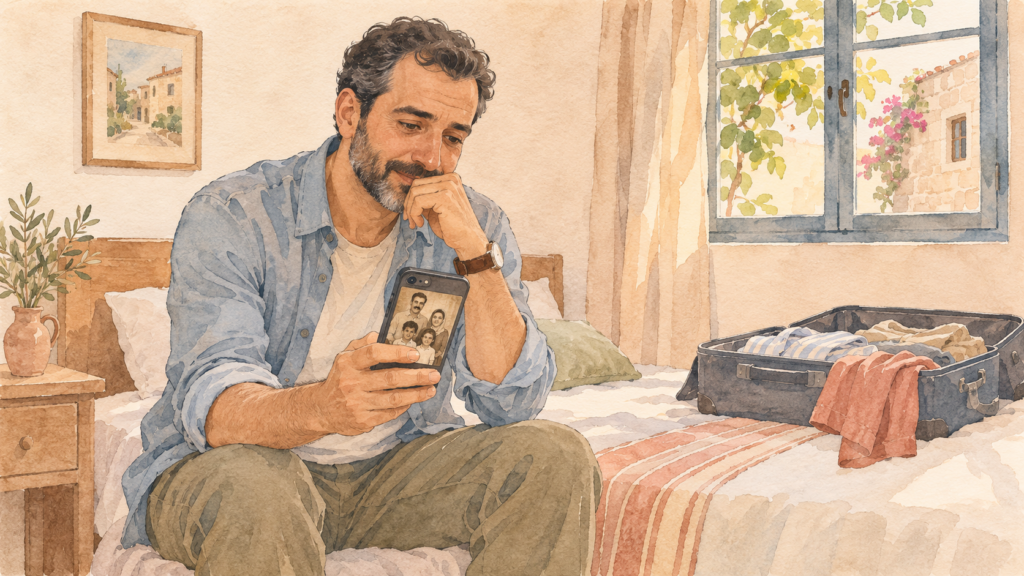
An adult life built around never disappointing your family leaves little room for a life of your own.
This is the difficulty of building an adult identity and boundaries that are independent from your family of origin – often because of being too enmeshed with them, or afraid of letting them down.
1 Understand the core chain
- A personal decision or preference differs from what your family expects
- The anticipated disapproval or conflict feels unbearable
- Your own preference is adjusted or hidden to match family expectations
- A separate, independent sense of identity stays underdeveloped
- The pattern continues in adult decisions, big and small
“An adult life built entirely around not disappointing your family often leaves little room for a life of your own.”
2 Recognise how it shows up
- Body: Tension or guilt when you make a choice your family wouldn’t expect.
- Thoughts: “They won’t understand this decision”, “It’s easier to go along with them.”
- Behaviours: Seeking family approval before big decisions, hiding choices that would cause disapproval.
One isolated sign is not enough to define a pattern.
3 The cycle how it keeps going
- Own preference differs
- Disapproval feels unbearable
- Preference adjusted
- Independent identity stays small
- Repeats in next decisions
…and back to the start.
4 Explore questions to go further
- Which decision have I adjusted specifically to avoid family disapproval?
- What would my life look like if their approval wasn’t a factor?
- Does closeness with my family really depend on always agreeing with them?
5 Go deeper needs and beliefs
Need: To be an independent adult while staying connected to your family.
Belief: “Disappointing or upsetting my family threatens the relationship itself.”
6 Next steps where to go from here
- Name one decision that is currently shaped mainly by how you expect your family to react.
- Share one honest opinion that differs from what your family expects.
- Think about whether the relationship has already survived a disagreement, and how.
Educational use – does not replace professional support. © Nomad Mental Health