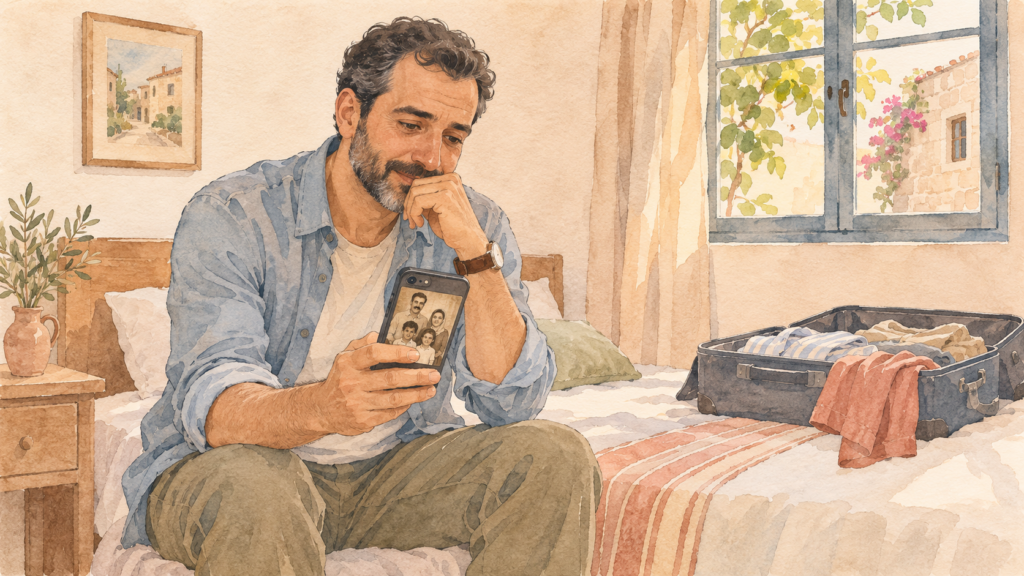
An unresolved conflict doesn’t stay in the past – it just waits for a situation that looks like it to resurface.
This is an ongoing conflict or hurt with a parent that has never been addressed directly, and that keeps affecting your emotions and current relationships – even without direct contact.
1 Understand the core chain
- A significant hurt or conflict happens with a parent
- The conflict is never directly addressed or resolved
- The unresolved feelings are put aside but stay emotionally active
- Similar dynamics – with the parent or with others – reactivate the original hurt
- The conflict stays unresolved and keeps affecting current relationships
“An unresolved conflict doesn’t stay in the past – it just waits for situations that look like it to resurface.”
2 Recognise how it shows up
- Body: A familiar tension or knot that comes back during interactions with the parent, or with similar figures.
- Thoughts: “This is the same thing that happened before”, “I don’t know how to bring this up now.”
- Behaviours: Avoiding certain topics with the parent, reacting strongly to situations that echo the original conflict.
One isolated sign is not enough to define a pattern.
3 The cycle how it keeps going
- Hurt or conflict happens
- Never addressed
- Feelings stay active
- Similar dynamics reactivate it
- Keeps affecting the present
…and back to the start.
4 Explore questions to go further
- What exactly has never been said or resolved in this conflict?
- What would I really want to happen if I addressed it directly?
- Is there a way to find some closure, even without the parent being involved?
5 Go deeper needs and beliefs
Need: Resolution, acknowledgement or closure about the original hurt.
Belief: “This can never be resolved, so there’s no point going back to it.”
6 Next steps where to go from here
- Write down privately exactly what has never been said or resolved.
- Think of a careful, low-risk way to come back to it, even partially.
- Explore what closure could look like without the parent having to change.
Educational use – does not replace professional support. © Nomad Mental Health