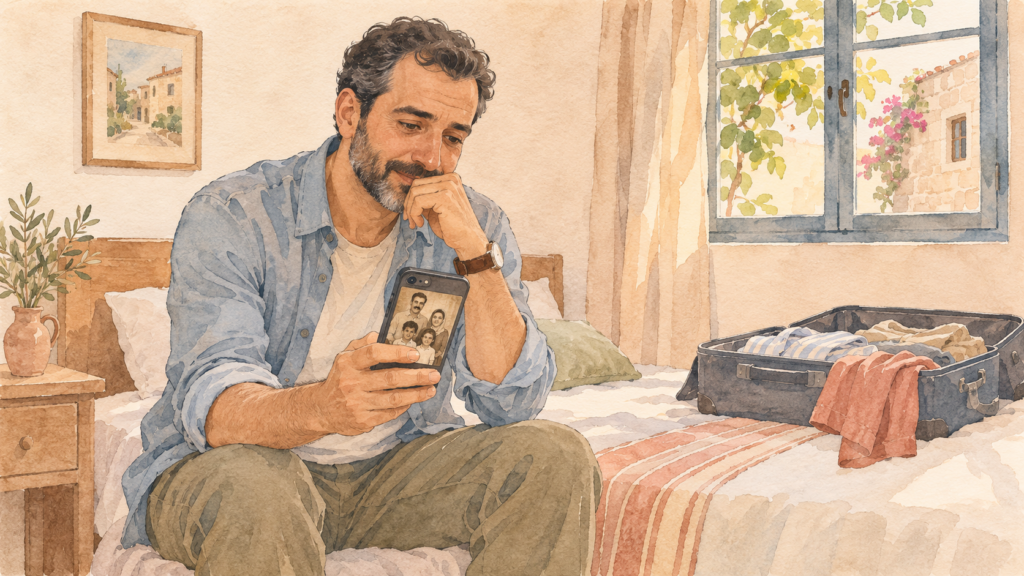
What was never questioned in childhood often repeats itself automatically in adulthood.
Inherited patterns are behaviours, beliefs or emotional reactions passed down through generations. They are absorbed without any conscious choice and often repeated on autopilot.
Definition
An inherited pattern is an unconscious model learned in childhood, repeated in adult life and passed on to others – unless you become aware of it and choose differently.
1 Understand the core chain
- A family pattern is repeated throughout childhood
- The pattern is absorbed as “normal”, without being questioned
- A similar situation comes up in adult life
- The same pattern is reproduced automatically
- The pattern is passed on further, without awareness
“What was never questioned in childhood often repeats itself automatically in adulthood.”
2 Recognise how it shows up
- Body: A sense of “familiarity” or automatic tension in situations that echo the family dynamic.
- Thoughts: “That’s just how things are done”, “I’ve never really questioned it.”
- Behaviours: Reproducing a parent’s reaction under stress, using the same communication style even when it doesn’t work.
One isolated sign is not enough to define a pattern.
3 The cycle how it keeps going
- Pattern modelled
- Absorbed as normal
- Similar situation
- Repeated automatically
- Passed on
…and back to the start.
4 Explore questions to go further
- Where exactly did I first see this pattern modelled?
- Do I actually agree with this pattern, or have I just never questioned it?
- What would a consciously chosen alternative look like here?
5 Go deeper needs and beliefs
Need: The freedom to choose your own way of responding, instead of inheriting it automatically.
Belief: “That’s just the way things are – there’s no other way to do it.”
6 Next steps where to go from here
- Name one specific pattern and trace it back to where it started.
- Pick one small moment to consciously choose a different response.
- If possible, ask a family member where this pattern comes from.
Educational use – does not replace professional support. © Nomad Mental Health