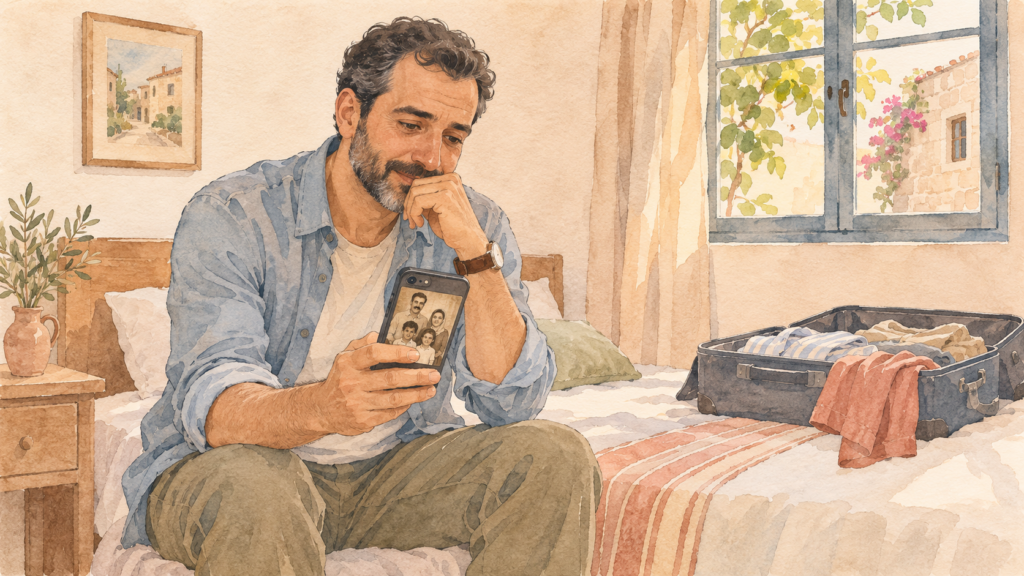
A role that once kept you safe doesn’t automatically stop running your life when you grow up.
A family role is a fixed position – like “the one who handles everything” or “the peacemaker” – given to you early in life, which keeps shaping your behaviour long after it stopped being needed.
1 Understand the core chain
- A family role is assigned or taken on early in life
- The role becomes the main way you are seen and valued
- Acting outside the role feels strange or unsafe
- The role is carried into adult relationships and situations
- Your identity stays tied to the role, even when it no longer fits
“A role that once kept you safe doesn’t automatically stop running your life when you become an adult.”
2 Recognise how it shows up
- Body: Tension when you step outside your usual role.
- Thoughts: “That’s just who I am in this family”, “If I don’t do it, who will?”
- Behaviours: Automatically taking the same role in new groups, feeling uneasy when someone else takes it.
One isolated sign is not enough to define a pattern.
3 The cycle how it keeps going
- Role assigned early
- Becomes main source of worth
- Stepping out feels risky
- Carried into adult life
- Identity tied to the role
…and back to the start.
4 Explore questions to go further
- What role did I play in my family, and is it still useful to me today?
- What would happen if I stepped out of this role, even briefly?
- Who would I be if this role wasn’t there to define me?
5 Go deeper needs and beliefs
Need: To be valued as a whole person, not only for the function of a fixed role.
Belief: “My worth depends on carrying on playing exactly this role.”
6 Next steps where to go from here
- Name the role out loud and notice when it switches on automatically.
- Do one small thing outside the limits of your usual role.
- Think about which parts of the role you would actually choose to keep, if it were optional.
Educational use – does not replace professional support. © Nomad Mental Health